 Architecture
Designing a Project Space Before the Work Begins
Establish baseline channels, file repositories, and communication rules before launching active development sprints.
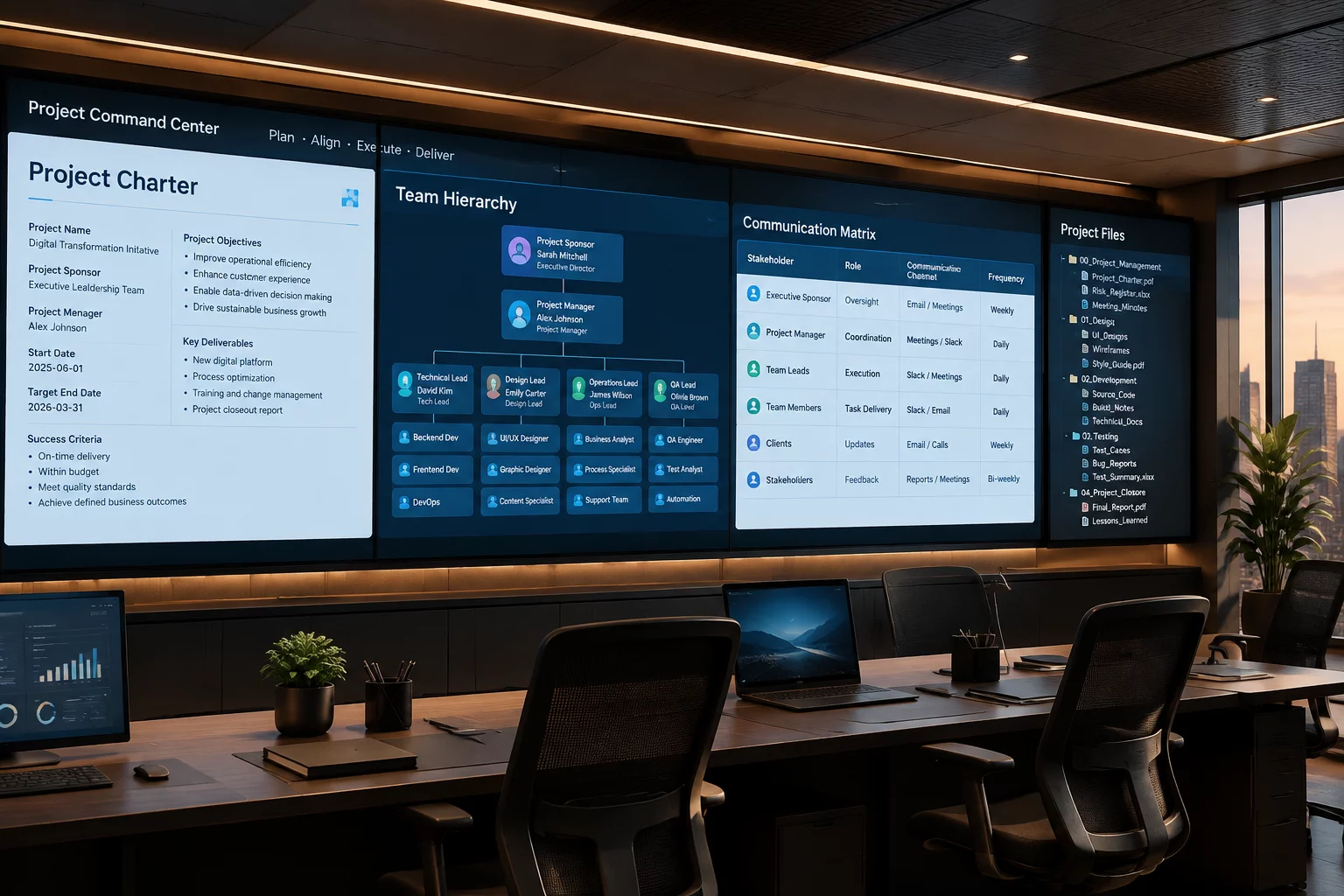
Seven content areas map the full information structure of a project — from early foundations to lifecycle change. Each area links directly to its guides and space charters.
Preparing the information structure before active work begins.
Assigning ownership of shared information and workspace sections.
Defining the purpose of each channel and discussion area.
Structuring shared documents around project activities.
Coordinating information flows between multiple departments.
Complete educational examples of project space organization.
Evolving the information structure as teams join and stages change.
Explore structured methodologies and field-tested space charters designed to eliminate fragmentation, prevent update fatigue, and maintain institutional memory from project kickoff to completion.
ArchitectureEstablish baseline channels, file repositories, and communication rules before launching active development sprints.
 Collaboration
Partitioning high-signal broadcasts from operational chats to prevent information fragmentation across squads.
 Governance
Assigning custodial roles for workspace trees, permissions hierarchies, and documentation reviews across leadership.
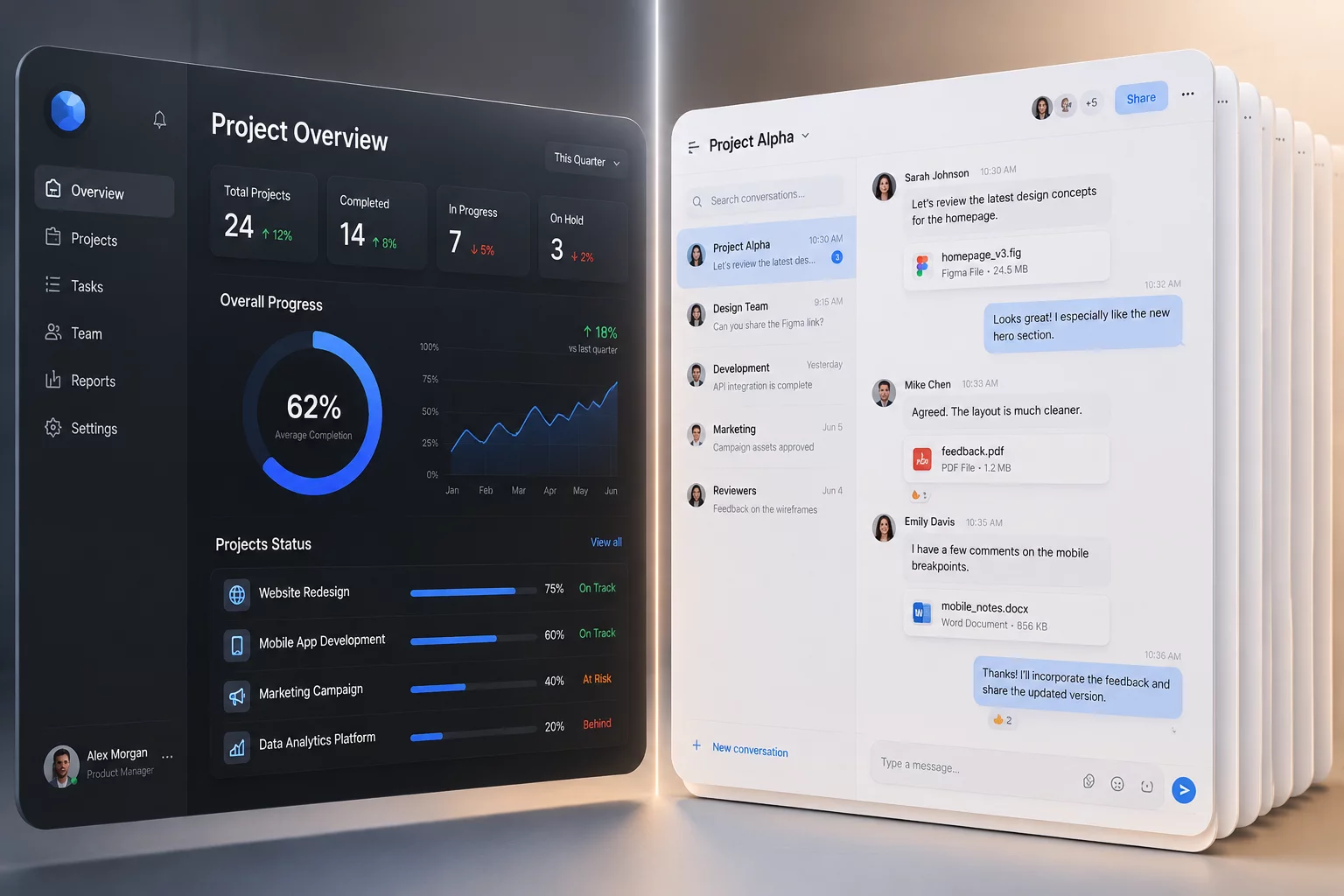 Collaboration
Techniques for protecting executive focus while keeping technical contributors deeply synchronized in sub-threads.
 Architecture
Integrating product, engineering, marketing, and operations under unified naming standards and cross-links.
 Architecture
Shifting from chaotic static folder trees to lifecycle activity-oriented documentation structures that scale.
 Collaboration
Frictionless onboarding protocols, contextual charter briefings, and access handover safeguards.
 Governance
Preventing content decay and broken references across extended multi-quarter delivery milestones.
The company is developing a new product. Marketers, designers, managers, and production staff are working on the project simultaneously. Each group uses its own materials and discusses separate issues. However, some information must be regularly shared between departments.
Inspect how local assets balance with common workspace deliverables.
Copy variations, ad spend distribution, and daily outreach iterations remain in private channels.
Product release windows, feature positioning briefs, and approved brand messaging guides.
Every project workspace setup follows a transparent, phased roadmap. Review key deliverables and provide formal approvals at each decisive milestone before proceeding.
Deliverable for Sign-off:
Project Charter & Tool Architecture Matrix
Client signs off on selected collaboration stack, storage destinations, and key project ownership roles before layout configuration begins.
Deliverable for Sign-off:
Information Space Governance Blueprint
Client approves folder taxonomy, file nomenclature rules, and departmental communication boundary protocols.
Deliverable for Sign-off:
Sandbox Validation & Template Approval
Client tests sample workflow routing and verifies that automated triggers correctly separate high-level updates from micro discussions.
Deliverable for Sign-off:
Project Space Operational Handover Certificate
Formal project sign-off confirming the team space is live, documented, aligned across departments, and ready for daily operations.
Explore curated platforms, synchronization bridges, and foundational configurations that ensure effortless cross-departmental coordination from project day one.
Hierarchical task engines configured with strict project charters, stage-gate approvals, and synchronized cross-team sprint tracks.
Event-driven webhooks and middleware pipelines that relay real-time status updates between task boards, documentation repos, and chats.
Single-source-of-truth document topologies using standardized naming schemes, automated access tiers, and immutable closure vaults.
Autonomous task summarization, risk detection heuristics, and workload balancing powered by structured AI prompts and rules.
Dedicated routing layers ensuring project inquiries, escalation matrices, and status broadcasts reach relevant departments without signal noise.
Operational playbooks specifying ownership charters, escalation protocols, meeting cadence definitions, and baseline naming conventions.